Money by Afterpay
Creating a new debit and savings proposition for Afterpay
As Head of Experience Design, I led experience design for Money by Afterpay, a new debit and savings proposition created to expand Afterpay's relationship with Australian customers and compete with modern fintech platforms.
The role went beyond designing an app. I built the multidisciplinary design capability, led the experience strategy and helped define the product vision, roadmap, content model and design system needed to take a new proposition from idea to launch.
The challenge
Afterpay was well known for buy now, pay later. Money by Afterpay was an opportunity to broaden that relationship by giving customers a transaction account, savings accounts and a debit card within a new Afterpay banking experience.
We needed to create a credible alternative to modern fintech and banking platforms. The experience had to feel relevant to a younger, digitally engaged audience while providing the clarity, security and trust people expect when managing their money.
Westpac provided the regulated banking infrastructure, but the proposition, brand and customer experience needed to be distinctively Afterpay.
Our research showed that people's relationship with money was both rational and emotional. Traditional banking experiences were good at showing balances and transactions, but often did little to build confidence or help people understand what to do next.
The challenge was to define a new proposition, product experience and design foundation at the same time. We were building a product, a team and a way of working in parallel.
My role
I built and led a multidisciplinary team across product design, research and content. I worked with product, brand and engineering to align the organisation around a shared vision and turn it into a practical roadmap.
My responsibilities included:
- Leading the customer and experience strategy
- Helping define the proposition, product vision and roadmap
- Building the design, research and content capability from the ground up
- Facilitating cross-functional vision and product workshops
- Shaping core product features and priorities
- Establishing the design system, process and quality standards
- Connecting customer needs with business, technology and banking constraints
Creating a Money Positive proposition
We developed Money Positive as the strategic idea at the centre of the experience: helping customers build confidence, understand their choices and take manageable steps towards the life they wanted.
The proposition was grounded in qualitative research across Australia, the UK and the US. It rejected money shaming and the idea that there was one correct version of financial success.
Six principles shaped the experience:
- Anti money-shaming
- Steps, not leaps
- Personalised futures
- Redefined relationships with money
- Trust in yourself
- Staying in your flow
These principles connected the brand, product, content and customer experience around a shared purpose rather than treating them as separate workstreams.
Connecting data, content and action
The experience strategy combined three elements:
- Personalised data that helped customers understand their money
- Relevant content that matched their context
- Small, achievable actions that helped them move forward
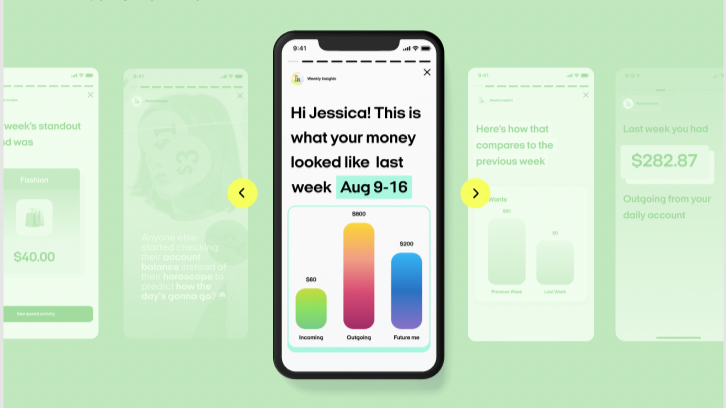
We organised financial activity around money coming in, money going out and Future You. This created a more human alternative to a traditional transaction list and provided a foundation for personalisation.
The strategy extended into semantic tagging and business rules, linking transactions, content and customer signals so the product could recommend useful next steps rather than only report what had already happened.
Building the product and design foundations
Because Money by Afterpay was new, the design system and product experience had to evolve together.
We created the visual language, components and patterns needed for launch, including a colour system that made different kinds of money activity easier to recognise. The system gave teams a shared language and provided a foundation for a coherent product as new features were developed.
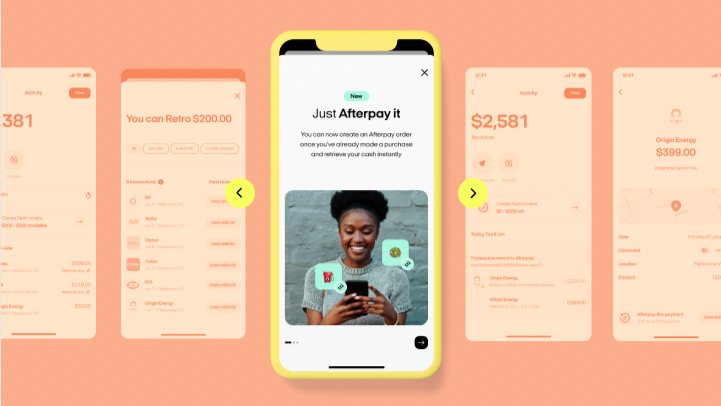
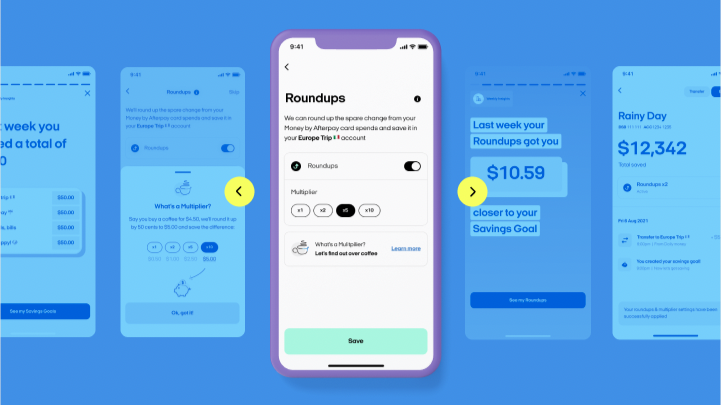
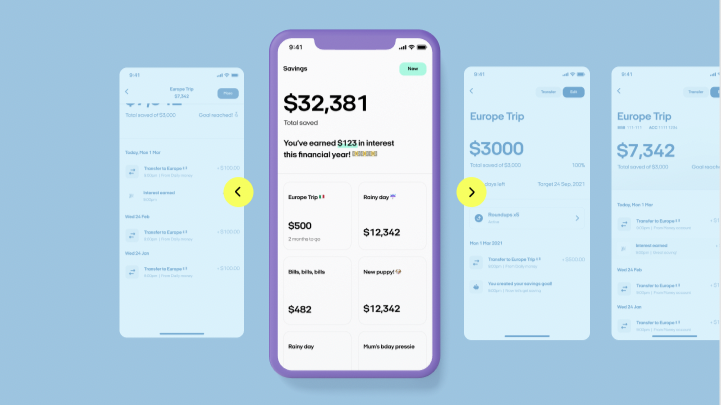
The launch experience brought together everyday banking features with more distinctive Afterpay propositions, including savings goals, Round Ups, Money Stories and Retro, which allowed eligible previous purchases to be converted into Afterpay instalments.
Making money easier to understand through Money Stories
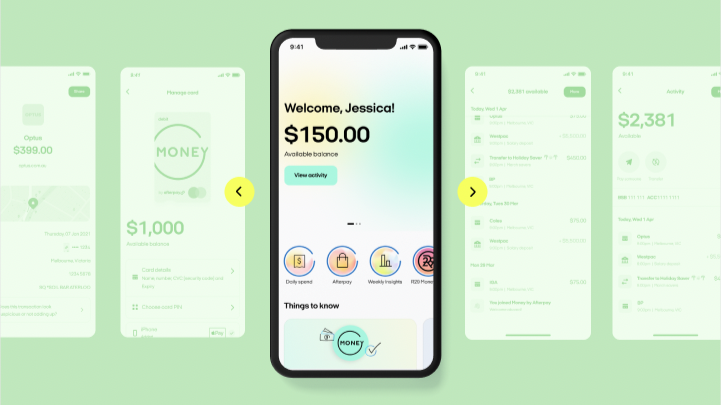
Money Stories turned account activity into personalised, story-based insights. Rather than expecting customers to interpret spreadsheets or transaction lists, the experience used familiar, short-form interactions to explain what had happened and suggest what they could do next.
The first stories included Daily Spend, Afterpay Spend and Weekly Insights. They combined customer data with clear content and actions, giving people a more approachable view of their finances.
We also developed community-led stories with editorial partners. Refinery29's Money Diaries were adapted into short-form in-app content, while Makes Cents used audience polling and editorial content created with Pedestrian to explore relevant money topics.
Money Stories reached 27% of active app users. Makes Cents became the most engaging Money Stories programme, with engagement reaching 55% of active users.
Looking beyond the launch
The strategy created a longer-term direction for a more personalised money-management experience. Concepts such as Money Fit explored how customer data, behavioural insight, content and small actions could support people in building better financial habits over time.
Not every concept was intended for the first release. The value of the framework was that it connected the immediate product roadmap to a clearer view of how the experience could evolve.
The outcome
Money by Afterpay launched as a new debit and savings proposition for Afterpay's Australian customers, extending the brand beyond buy now, pay later into everyday money management.
For me, the most important outcome was building the foundations of a new product and design organisation at the same time: a differentiated proposition, a multidisciplinary team, a coherent design system and an experience strategy that connected customer data, content and action.
Money Stories demonstrated that the strategy could translate into meaningful engagement, giving customers a more personal and approachable way to understand their money.